From Toronto to Tokyo: Why the World’s Quantum and AI Innovators Are Turning to Albany
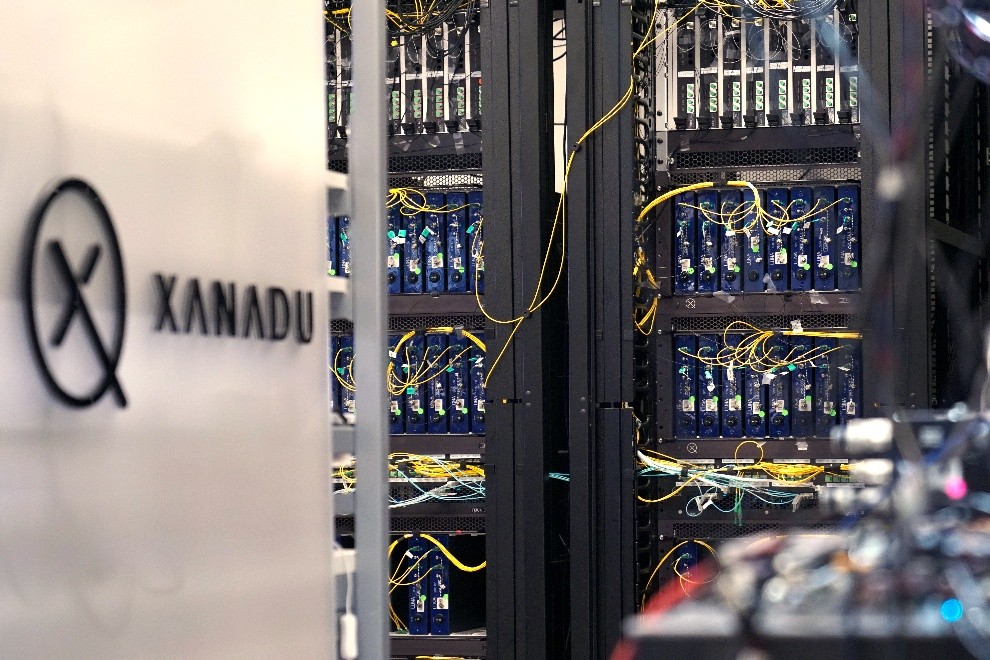
Quantum computer hardware. Courtesy Xanadu Quantum Technologies.
Highlights
- Capital Region researchers are playing a major role in helping startups with substantial support from Canadian and Japanese governments prepare for the mass production of cutting-edge chips for quantum computers and/or AI data centers.
- NY Creates is supplying silicon nitride Photonic Integrated Circuit (PIC) wafers to Xanadu Quantum Technologies, based in Canada, which is expanding its workforce at the Albany NanoTech Complex.
- Rapidus next year will start mass producing in Japan 2nm chips pioneered by IBM at NY Creates’ Albany NanoTech Complex.
- Rapidus not only dispatched 150 engineers to Albany for training but also their families, totaling 500 people.
- An executive of the Japanese startup dubbed the IBM-Rapidus team in Albany the “Titans.”
- GlobalFoundries’ new U.S. quantum foundry could deepen its collaboration with international quantum hardware startups.
From Canada’s leading quantum computing startup to Japan’s ambitious effort to reclaim leadership in advanced semiconductor manufacturing, organizations around the world are turning to New York’s Capital Region to develop the technologies that will power the next generation of AI and quantum computing. Through assets such as NY Creates, IBM, and GlobalFoundries, the Capital Region has become a critical launch pad for breakthrough innovations, workforce training, and semiconductor manufacturing strategies that extend far beyond the United States.
This global influence is rooted in the Capital Region’s unique concentration of semiconductor research and development assets. At Creates’ Albany NanoTech Complex, Creates and IBM are advancing next-generation semiconductor and quantum technologies, while GlobalFoundries is expanding U.S. quantum manufacturing capabilities. Together, these institutions are helping maintain American leadership in advanced computing while also enabling innovation efforts around the world.
“NY Creates’ Albany NanoTech Complex serves as a key national asset by providing our industry partners, researchers, and engineers with access to leading-edge semiconductor R&D facilities where next-generation technologies can be developed, tested, and scaled,” said Paul Kelly, NY Creates’ Vice President of Strategies, Partnerships, and New Ventures & COO. “As the global race for AI data centers and quantum computing accelerates, our ability to bring together industry experts from around the world to tackle the challenges that will facilitate leading-edge innovations reinforces why Albany is recognized as a key location for advancing this critical semiconductor ecosystem.”
Canada
One of the clearest examples of the Capital Region’s growing international influence is its role in supporting Canada’s leading quantum computing company. The Canadian government has invested more heavily in the Toronto-based Xanadu Quantum Technologies than any of the country’s other quantum computer-related startups. Last August, Xanadu announced its plans to convert a former soup factory in Toronto into a manufacturing, packaging, and assembly facility for quantum computing components. The Canadian government is providing $195 million CAD ($143 million USD) for the transformation of the 158,000-square-foot facility “to build up advanced quantum manufacturing in Canada.”
Xanadu is in the process of refining its designs for its quantum computer photonic chips, which are made on several platforms, most notably silicon nitride (SiN) and thin film lithium niobate (TFLN). In its Q2 2026 earnings call, Xanadu CEO and Chairman Christian Weedbrook detailed how Creates “do[es] our silicon nitride, which is primarily used to create our qubits.” He said Xanadu had 100 wafers from NY Creates by the start of the last quarter, with that amount increasing to 150 and expected to go up even more.
Using its 300 mm silicon nitride (SiN) photonic integrated circuit (PIC) platform at the Albany NanoTech Complex, Creates is fabricating Xanandu-designed SiN qubit-related wafers. The Canadian company is using Creates as a mid-tier supplier of SiN wafers, which are tested and help refine designs for greater reductions of photon/circuit loss.
“Albany also gives us direct access to established U.S. semiconductor and photonics supply chains. That’s a real advantage of our photonic approach, and we believe it will help accelerate both our R&D and manufacturing timelines,” Weedbrook said in the August earnings call.
Xanadu has been leasing space at the Albany NanoTech Complex since 2024. Last July, the company announced plans for a “significant expansion” of its Albany workforce.
Japan
Albany’s impact extends beyond North America. In Japan, the Capital Region has become an essential training and technology development hub for one of the world’s most ambitious semiconductor initiatives. In Chitose, Hokkaido, Rapidus is preparing to start production at its newly constructed 503,000 square-foot IIM-1 fab of 2nm gate-all-around (GAA) CMOS logic chips based on IBM-licensed technology. Rapidus will initially seek orders from fabless companies that design custom semiconductors for AI data centers. Since Rapidus’ founding in 2022, the Japanese government has invested more than ¥2.3 trillion ($14.9 billion USD) for R&D at the company.
Rapidus’ rapid transition to mass production is being heralded as “Japan’s return to the frontier of semiconductor manufacturing.” To achieve this feat, Rapidus in 2023 dispatched about 150 engineers to the Albany NanoTech Complex for joint R&D and training on GAA.
Earlier this year Rapidus’s senior managing executive officer, Shigehiro Fujino, revealed that he had named his named his team of U.S. and Japanese engineers at the Albany NanoTech Complex the “Titans, after a famous movie.” He said “IBM’s cooperation was indispensable,” and the Titans functioned as “one team.” In fact, engineers’ roles were not divided Rapidus and IBM, “so that we could advance development as a single team.”
For two years, approximately 150 Japanese engineers and their families, or 500 people total, relocated to the Capital Region. Those engineers worked alongside IBM and Creates researchers to prepare Rapidus for commercial production of advanced 2nm chips.
Europe/Australia
The Capital Region’s influence is also reaching emerging quantum companies across Europe and Australia through GlobalFoundries‘ expanding quantum manufacturing capabilities. When GF last May announced the launch of its Quantum Technology Solutions unit, several international quantum hardware startups expressed interest deepening their collaboration with the semiconductor manufacturer. They included Diraq in Sydney, Australia; Quantum Motion in London, U.K.; and Equal1 in Dublin, Ireland.
Each startup has acknowledged using GF’s 22 nm fully depleted silicon-on-insulator (22FDX) platform to develop their quantum processor units, cryogenic CMOS and/or silicon spin qubit architectures. GF’s 22FDX platform was originally located at its Fab 1 in Dresden, and an additional line was introduced to Fab 8 in Malta around 2024.
“As GlobalFoundries invests in a U.S. quantum foundry, we see a clear path to expand that collaboration, accelerate the development of high-performance silicon-based quantum processors and scale within a secure domestic ecosystem,” said Diraq CEO and Founder Andrew Dzurak.
Whether developing quantum photonic chips for Canada, training engineers from Japan, or supporting quantum hardware startups across Europe and Australia, the Capital Region continues to play an outsized role in shaping the future of advanced computing. As global competition for semiconductor leadership intensifies, Albany’s unique combination of research infrastructure, talent, and manufacturing expertise is positioning the region as one of the most important innovation hubs in the world.
CEG Initiatives
CEG has a long history of supporting the Capital Region’s semiconductor industry, from marketing the region and hosting events at SEMICON West to sponsoring several apprenticeship programs for GlobalFoundries and NY Creates to conducting a microelectronics workforce needs assessment for the Northeast Regional Defense Technology Hub (NORDTECH). CEG has also launched a Semiconductor Growth Access Program (SGAP) to strengthen the region’s semiconductor supply chain by providing targeted businesses with funding for legal, financial, business planning, and technical accounting assistance.
Don’t miss these insights into the trends that are shaping the Capital Region’s economy. Sign up for CEG’s e-news and follow us on: