Capital Region Reasserts Leadership in Power Electronics
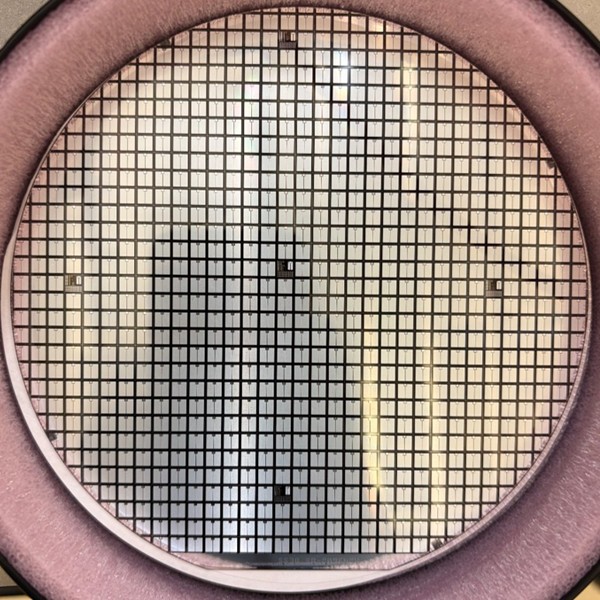
A NoMIS Power 3.3 kV SiC MOSFET. Courtesy NoMIS Power.
Highlights
- The region is playing a major role in advancing high-voltage 10 kV silicon carbide (SiC) devices and bipolar-CMOS-DMOS (BCD) technology.
- GlobalFoundries added a BCD process technology platform to Malta.
- Wolfspeed introduced the first commercially available, mass-produced 10 kV SiC devices made at its Marcy Nanocenter.
- GE Aerospace teamed up with Wolfspeed to advance high-voltage SiC devices.
- NoMIS Power partnered with Richardson Electronics to advance mid- to high-voltage SiC devices.
Years after helping pioneer the mass production of silicon carbide (SiC) chips, the Capital Region is reasserting and accelerating its leadership position in the power electronics industry.
Amid rising demand for domestic power semiconductors from the datacenter, smartphone and automotive industries, Capital Region companies are expanding local manufacturing, commercializing new technologies and accelerating market adoption.
“As the electrification of our world becomes ever more prevalent, more electric power is needed. Therefore, moving to higher operating voltages is necessary to reduce the electrical current demand of systems interfaced to electric grids while still delivering the same amount of, if not more, power at high efficiency and reasonable cost to the consumer. NoMIS Power and other semiconductor technology and adjacent companies in the Capital Region are thus playing a pivotal role in making sure New York State and the U.S. continue to be technology leaders in a fast changing, competitive global environment,” said NoMIS Power CEO and Co-Founder Adam Morgan.
GLOBALFOUNDRIES
While the region has a long history with SiC technology, another important power semiconductor technology is debuting in the Capital Region. GlobalFoundries is onshoring at Fab 8 in Malta its bipolar-CMOS-DMOS (BCD) process technology platform. BCD enables “smart power” by integrating onto one chip three types of transistors: precision analog (bipolar), digital control (CMOS) and power handling (DCMS). According to GF’s 2026 Sustainability Report, BCD enables more efficient electric vehicle (EV) battery design and management systems; supports audio and power management applications in smart phones; and is used in datacenter power delivery systems.
BCD is a technology that serves power electronics, similar to the SiC MOSFETs (Metal-Oxide-Semiconductor Field-Effect Transistor) mass produced by Wolfspeed at its Marcy, New York fab and piloted by GE Aerospace in Niskayuna. These two technologies, however, serve different roles: SiC MOSFETs are power transistors for high-power switching, whereas BCD is integrated circuit technology made with silicon and used for smart power management and integration.
In April 2025, GF and Cirrus Logic in Austin announced their expanded strategic investment to develop next-generation BCD process technology for smartphone and automobile chips that would be made at Fab 8 in Malta. GF’s website currently notes its BCD technologies are manufactured at 300 mm at its Malta, Germany and Singapore fabs. Mass production on GF’s 55BCDLite process technology started abroad in 2018.
Last February, GF announced an expanded partnership with Renesas Electronics through which the Japanese semiconductor company will gain further access to GF’s technology portfolio, including BCD. With an emphasis on strengthening domestic semiconductor production, GF said chip designs under the partnership were scheduled to start production in mid-2026, initially in the United States and later in Germany and Singapore.
Power Electronics Legacy
The Capital Region has been at the forefront of power electronics for decades, starting when General Electric (GE) partnered with Cree in 1990 to develop silicon carbide (SiC) photodiodes that were manufactured in Niskayuna. Over nearly 25 years and through a series of innovations, GE developed SiC MOSFETs. Starting in 2014, GE sought to commercialize that technology through New York Power Electronics Manufacturing Consortium (NYPEMC), and by 2017 it had demonstrated the nation’s first SiC-based patterned wafer, using a 150 mm SiC processing line at the Albany NanoTech Complex.
In 2019, Cree (now known as Wolfspeed) demonstrated its own SiC test wafers on the NYPEMC equipment, which was later transferred to the Marcy Nanocenter to support the world’s-first, 200mm SiC device fab. In 2020, GE licensed its technology to manufacture SiC devices and modules for power electronics to II-VI (now Coherent) in Saxonburg, Pennsylvania. In 2022, after qualifying its 1200 V SiC MOSFET, II-VI entered a three-year technology access agreement under which GE researchers in Niskayuna would help accelerate customer design-in engagement activities.
GE Aerospace
Last month, GE Aerospace and Wolfspeed announced a partnership under which the former’s researchers in Niskayuna will work to accelerate the adoption in aerospace and defense markets the adoption of high-voltage10 kV SiC MOSFET made at the latter’s fab in Marcy.
The partnership was announced a week after GE Aerospace reported it had qualified its High-Voltage Power Controller (HVPC) and Unidirectional Converter (UDC) for U.S. military ground vehicles. This achievement highlights the growing demand for next-generation power electronics in defense platforms.
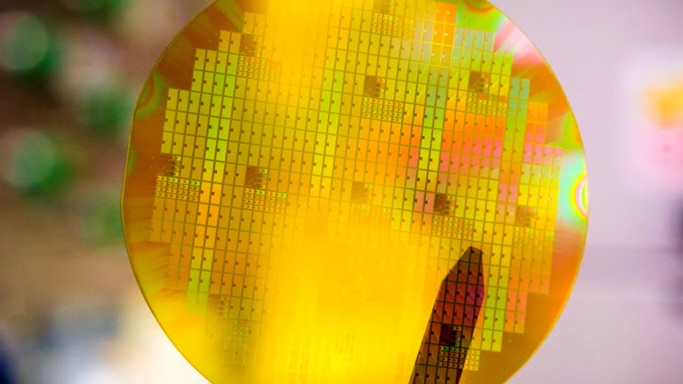
A SiC wafer. Courtesy GE Aerospace.
NoMIS Power
At the Albany NanoTech Complex, NoMIS Power is also working on higher voltage SiC MOSFETS. Last May, the Albany startup and Richardson Electronics entered a partnership to advance SiC solutions 1.2 kV to 10 kV, with particular emphasis on medium-voltage and high-voltage SiC solutions for AI datacenters, battery storage systems, aerospace and defense power systems, and other applications. NoMIS is a spinout of the University at Albany’s College of Nanotechnology, Science, and Engineering that grew out of the NYPEMC effort.
Last year, NoMIS emerged as one of eight Phase 1 winners of the U.S. Department of Energy’s American-Made Silicon Carbide (SiC) Packaging Prize, which aimed to develop 10-kV, 2,000-A rated SiC power modules. NoMIS has been successfully developing engineering samples of 10 kV SiC MOSFETs in support of various U.S. government related programs, according to Morgan, the startup’s CEO and co-founder.
“Silicon carbide power semiconductor devices, such as those produced by NoMIS Power and rated up to 10 kV, are the key building blocks of next-generation power electronics that will enable this electrified future. Without SiC-based technologies, the level of electrification the market demands will not be possible,” Morgan said.
CEG Initiatives
CEG has a long history of supporting the Capital Region’s semiconductor industry, from marketing the region and hosting events at SEMICON West to sponsoring several apprenticeship programs for GlobalFoundries and NY Creates to conducting a microelectronics workforce needs assessment for the Northeast Regional Defense Technology Hub (NORDTECH). CEG has also launched a Semiconductor Growth Access Program (SGAP) to strengthen the region’s semiconductor supply chain by providing targeted businesses with funding for legal, financial, business planning, and technical accounting assistance.
Don’t miss these insights into the trends that are shaping the Capital Region’s economy. Sign up for CEG’s e-news and follow us on: