Albany/NY’s Capital Region Is Becoming a Space Hub for Microelectronics
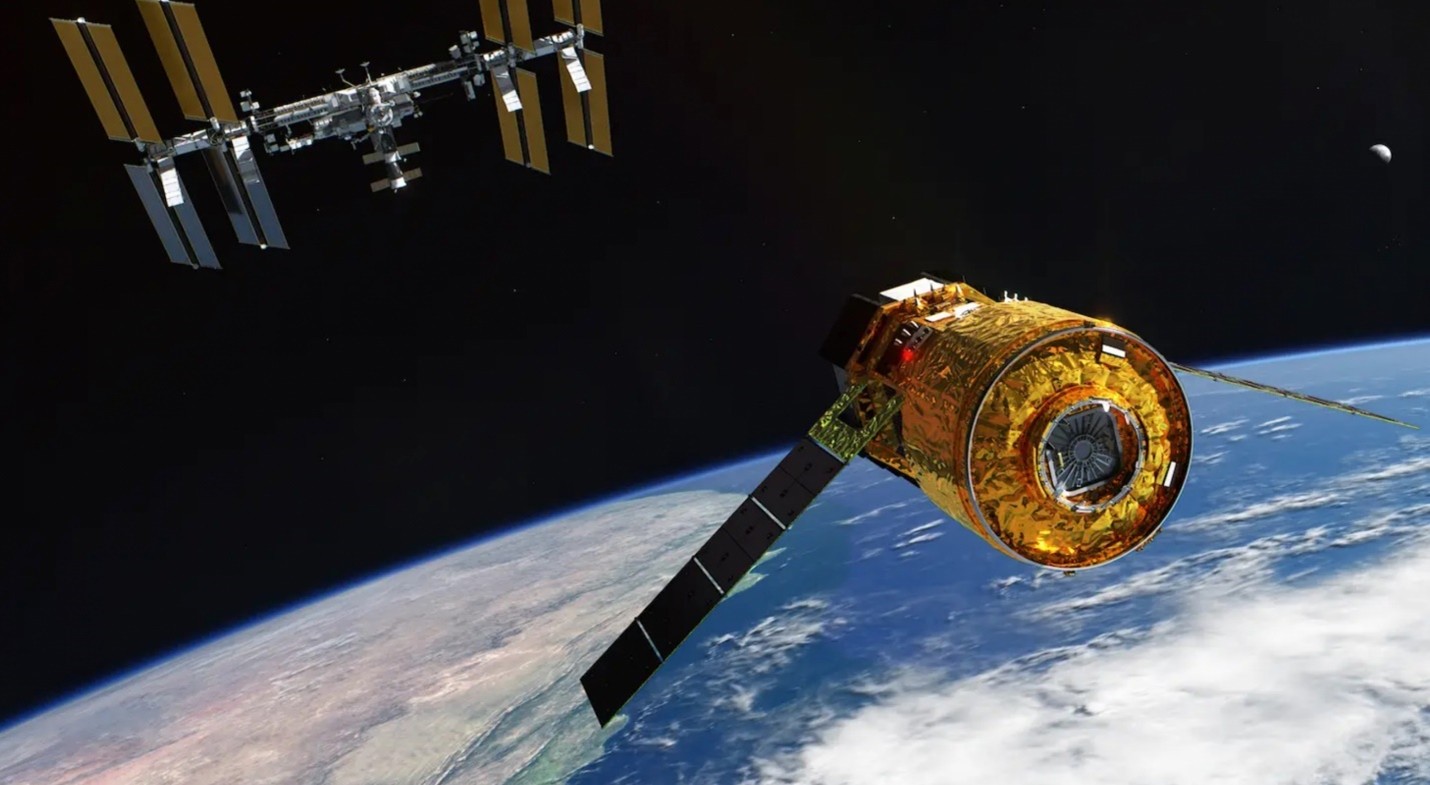
JAXA’s cargo spacecraft approaches the Internation Space Station. The cargo included semiconductor devices supported by AIM Photonics in Albany. Courtesy JAXA.
The Capital Region is increasingly becoming a critical resource for providing radiation-hardened (rad-hard) semiconductor chips for deep space missions and satellites. The region’s semiconductor industry is also playing a pioneering role in designing, developing and prototyping silicon photonics (SiPho) and artificial intelligence (AI) chips for space-related applications.
Over the past year, for example, Malta, New York-based GlobalFoundries has gone from minimal revenues in the satellite communications (SATCOM) industry to “winning across the board.” Its SATCOM business is now on track for $100 million of revenue in 2025, GF President and COO Niels Anderskouv said in a November earnings call.
In addition, the region has become a hotbed of high-tech, space-focused R&D efforts through work conducted at NY Creates’ Albany NanoTech Complex, the most advanced 300mm non-profit-led semiconductor R&D hub in North America. The American Institute for Manufacturing Integrated Photonics (AIM Photonics), a Manufacturing Innovation Institute (MII) operating at the NanoTech Complex, leverages a 300mm platform to develop technologies that have arrived on the International Space Station. Rensselaer Polytechnic Institute, IBM Research, and GE Aerospace are just some of the academic and industry organizations engaged in this cutting-edge field in the Capital Region.
“NY Creates is proud to provide a launch pad for technologies that are enabling technological innovations for space applications around the globe. From modulators for efficient power consumption by spacecraft, to scalable arrayed superconducting nanowire single photon detectors for cutting-edge telescope applications, and superconducting digital logic circuits that lead to efficient data centers in space to address power consumption challenges, we are proud to work with our partners to pioneer these next-generation R&D efforts, pushing forward solutions to positively impact our daily lives in the U.S. – and beyond,” said NY Creates President Dave Anderson.
Domestic Production
GF’s domestic fabs in New York and Vermont play an important role in supplying the space industry. GF has highlighted how Fab 8’s 45RFSOI, 45RFE and 12LP process nodes for chips are used for SATCOM applications.[1] Last June, SpaceX applauded GF’s plans to expand its U.S. chip production and said it was “core to Starlink’s growth and our commitment to manufacturing in the U.S.” In fact, SpaceX last spring entered upstate New York’s semiconductor supply chain when its subsidiary, Tune Holdings, acquired Akoustis Technologies’ assets in Canandaigua, where it makes bulk acoustic wave (BAW) high-band RF filters for SATCOM and other applications.
“With satellite launches expected to grow 150 percent and SATCOM subscribers set to double in the next five years, we expect the semiconductor SAM [serviceable addressable market] for this opportunity to be over $1 billion through the end of the decade, with GF as an anchor supplier,” Anderskouv said in the November earnings call.
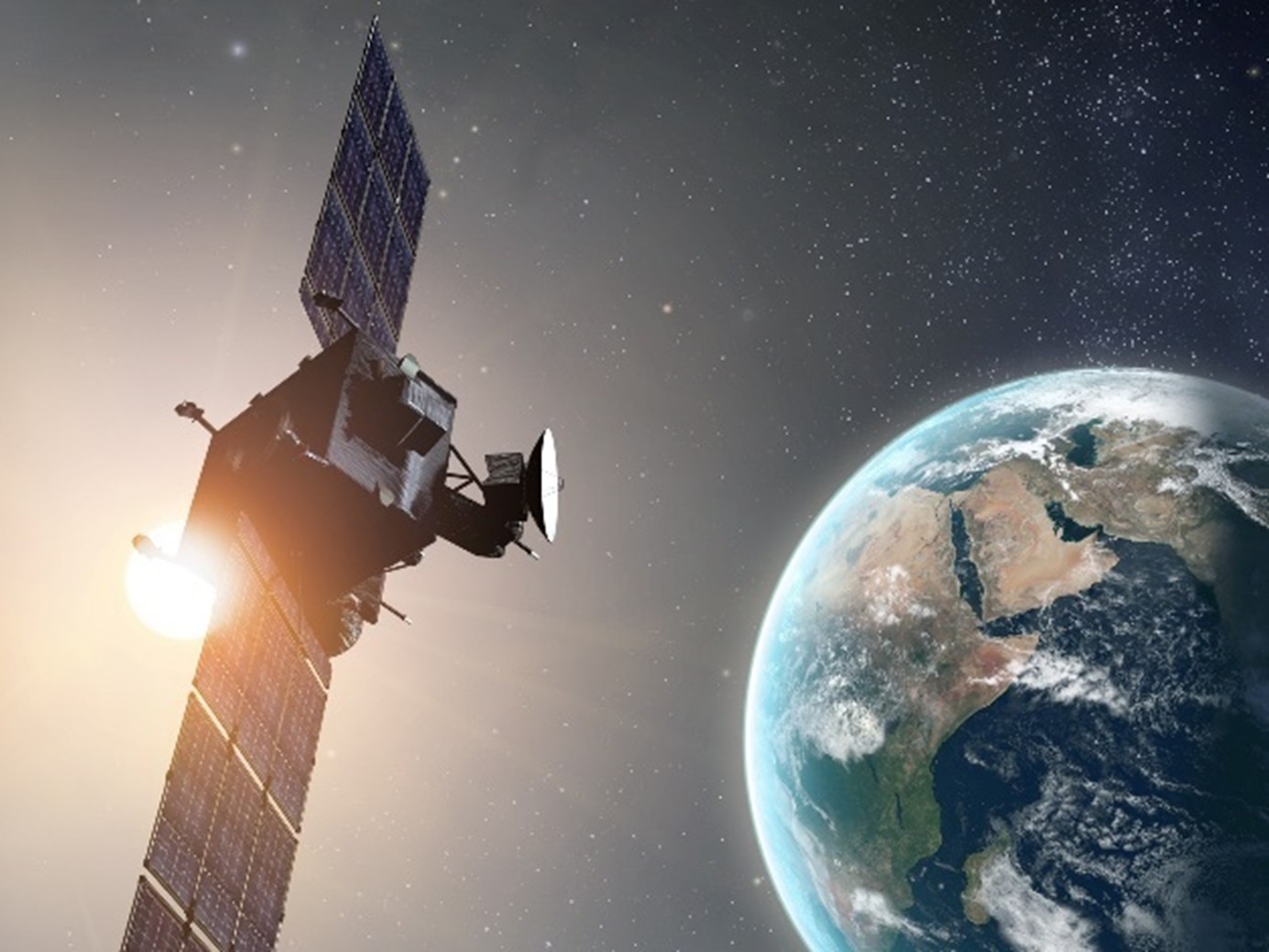
Northrop Grumman subcontracted with GlobalFoundries in Malta for major systems/subsystems under a U.S. Air Force Evolved Strategic SATCOM (ESS) Space Segment Rapid Prototype initiative. Courtesy Northrop Grumman.
Radiation Hardening
The Capital Region’s rising status in the space industry was evident in early November as the Radiation Hardened Electronic Technologies Meeting (RHET) met in Albany and at GF’s Fab, a Defense Microelectronics Activity (DMEA)-accredited trustred foundry. RHET, which addresses electronic development efforts to support national space and missile systems, is led by the Air Force Research Laboratory (AFRL), Albuquerque, NM.
Radiation hardening is important because it enables integrated circuits and electronic components to withstand the high levels of radiation which satellites and spacecraft are subjected to in space.[2]
Rad-Hard R&D
The Capital Region is not only fabricating rad-hard chips, it is also innovating the next generation of rad-hard semiconductors for space applications. Examples include:
- Sandia National Laboratories and IBM Research in Albany: Researchers studied the resiliance of Gate-All-Around Field Effect Transistors (GAA NSFETs) “to a variety of surrogate radiation environments, and model relevant space radiation effects.”
- Vanderbilt University and GE Aerospace: GE researchers in Niskayuna to design, fabrication, and testing of rad-hard silicon carbide (SiC) power devices for space applications.
- Rensselaer Polytechnic Institute researchs, under a NASA grant, developed computational models for predicting radiation failures in SiC-based Schottky diodes and power field-effect transistors (FETS) for space applications.
International Space Station
A few days before the RHET meeting started in Albany, a Japan Aerospace Exploration Agency (JAXA) cargo transport vehicle arrived to the International Space Station (ISS) with silicon-organic hybrid electro-optic (SOH EO) modulators and AI photonic chips. Those devices were made by AIM Photonics in NY Creates’ Albany NanoTech Complex. This mission was part of NASA‘s Materials International Space Station Experiment (MISSE-21), which will use the ISS as a testbed for exposing advanced materials to the harsh space environment, such as intense radiation, atomic oxygen erosion, extreme temperature fluctuations, and vacuum conditions.
BAE Systems
The Capital Region is poised to make a bigger impact in space in 2026, which is when BAE Systems’ RAD 510 single-board computer (SBC) is expected to be qualified by the Defense Logistics Agency (DLA) for space missions. This next generation SBC is powered by BAE’s rad-hard RAD510 system on chip (SoC), which is made with GF’s 45 nm SOI technology in Malta.
Last month, GF also announced BAE’s RH12 Storefront rad-hard application-specific integrated circuits (ASICs) will be manufactured with Fab 8’s 12 nm FinFET platform. The BAE-GF partnership creates “a one-stop-shop for state-of-the-art microelectronics performance to complete their missions in the harsh space environment.”[3]
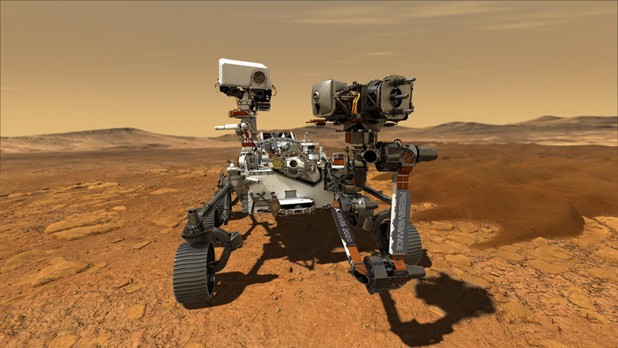
NASA’s Perseverance rover on Mars uses BAE Systems’ RAD750 single board computer. The next generation of the RAD750 will be the RAD510, which features a radiation-hardened system-on-chip made using GlobalFoundries’ 45 nm silicon-on-insulator technology at Fab 8 in Malta. Courtesy NASA
Satellite antenna systems
NEXT Semiconductor Technologies in San Diego uses an “onshore GlobalFoundries 12 nm FinFET process” (i.e., Fab 8 in Malta) to make its latest ultra-wideband antenna processor unit (APU), the NX450.
Prototype Military SATCOM
In January 2024, Northrop Grumman awarded GF a $2.9 million subcontract for work performed in Malta on “MAJOR SYS/SUBSYS” relating to a U.S. Air Force Space and Missile Systems Center (SMC) Evolved Strategic SATCOM (ESS) Space Segment Rapid Prototype initiative that began in 2020, according to contract data from USASpending.gov. [4]
Neuromorphic AI hardware
IBM Research’s NorthPole AI chip couples memory with the chip’s compute units and control logic, whereas they have traditionally been separately connected. According to IBM, “NorthPole could enable satellites that monitor agriculture and manage wildlife populations.” While designed and developed at IBM’s lab in Almaden, California, a paper by IBM researchers stated the NorthPole interference chip “is fabricated in GlobalFoundries 12nm FinFET process.”
Geospacial Insights with AI Chips
IBM Research’s first system-on-a-chip developed by its AI Hardware Center at NY Creates’ Albany NanoTech Complex was the Spyre. It was produced using 5 nm node process technology. Last year, the University of Alabama (UAH) in Huntsville installed a computing cluster containing Spyre chips at its National Space Science Technology Center.[5]
CEG Initiatives
CEG has a long history of supporting the Capital Region’s semiconductor industry, from marketing the region and hosting events at SEMICON West to sponsoring several apprenticeship programs for GlobalFoundries and NY Creates to conducting a microelectronics workforce need assessment for the Northeast Regional Defense Technology Hub (NORDTECH).
Notes
[1] When it comes to domestic production, GF last May highlighted “three, US-manufactured RF process technologies for SATCOM front-ends and beamformers,” including its 45 nm RF silicon-on-insulator (45RFSOI) and 45 nm RF-enhanced SOI (45RFE) technologies at Fab 8 and 130 nm (130NSX) process technology at Fab 9. Last month GF introduced a new rad-hard RF offering for space applications that leverages its 12 nm FinFET (12LP) platform at Fab 8. GF’s 22 nm fully depented silicon-on-insulator ( 22FDX) process technology platform is also important to SATCOM digital beamformers, but Fab 8 only recently started shipping chips made on it for automotive, IoT and smart mobile applications. In 2017, the 22FDX platform was qualified for production at GF’s Fab 1 in Dresden.
[2] In 2022, the Department of Defense provided GF with $117 million to support the transfer of its 45 nm SOI manufacturing process equipment from its Fab 10 in East Fishkill to Fab 8 in Malta to ensure DoD’s access to rad-hard 45nm SOI semiconductors.
[3] GF has noted that its semiconductors made with its 3D FinFET technology in Malta “are one of the few chips that meet the stringent requirements for the long journey to deep space.” Last year, GF stated that Fab 8’s chips “are on their way to Mars, past the moons of Jupiter, and will head even further into deep space.”
[4] For this five-year project, the SMC (now part of U.S. Space Force) had Northrop Grumman, Lockheed Martin and Boeing compete to build protype ESS payload elements. Space Force last July awarded Boeing with a $2.8 billion contract for the first two satellites.
[5] UAH, IBM and NASA researchers leveraged NASA satellite data to develop geospatial, weather, and climate models, which can serve as a foundation for Spyre cluster applications such as flood detection to tree canopy height assessment gravity wave measurements.
Don’t miss these insights into the trends that are shaping the Capital Region’s economy. Sign up for CEG’s e-news and follow us on: